
De pie a la orilla del agua, con una botella de muestra en la mano, empecé a comprender que proteger nuestros ríos y lagos no es solo tarea de científicos, sino de comunidades enteras. Lo que comenzó como una oportunidad para aprender sobre el monitoreo de la calidad del agua se convirtió rápidamente en una mirada más profunda a las personas detrás de los datos y al propósito común que las une.
Los Waterkeeper, los guardianes de ríos y los guardianes de costas desempeñan un papel fundamental en el monitoreo y la protección de los cursos de agua locales, actuando a menudo como principales defensores de toda una cuenca hidrográfica. Mediante programas semanales de monitoreo de bacterias durante los meses de mayo a noviembre, recopilan y comparten datos que informan al público sobre la seguridad del agua; sin embargo, al haber solo un Waterkeeper por cuenca, este trabajo depende en gran medida del apoyo de personal y voluntarios comprometidos.
Como parte de esta experiencia, pude observar de primera mano todo el proceso de monitoreo de la calidad del agua, desde la recolección de muestras directamente en el río hasta el trabajo en el laboratorio para prepararlas y analizarlas. Observar cómo cada paso contribuye a identificar los niveles de bacterias me permitió apreciar aún más la precisión, la constancia y el esfuerzo necesarios para obtener datos confiables cada semana. Tras conocer mejor el gran apoyo comunitario que reciben estos programas, quise comprender mejor a las personas que los llevan a cabo. Me centré en recopilar perspectivas tanto de voluntarios como de personal, organizando mis preguntas en tres temas principales: motivación y conexión personal, impacto y significado, y observaciones y tendencias.
Motivación y conexión personal
Uno de los temas más recurrentes que escuché fue la profunda conexión personal que la gente tiene con sus ríos y arroyos. Ya sea por haber crecido cerca del río, por el deseo de proteger la salud de su familia o simplemente por sentir una responsabilidad hacia su comunidad, tanto los voluntarios como el personal compartían un fuerte sentido de propósito que motivaba su participación.
Para Tim Briceland-Betts, voluntario de Anacostia Riverkeeper, esa motivación proviene de un profundo aprecio por la naturaleza y su capacidad de recuperación. Reflexionando sobre lo que lo inspiró a recolectar muestras de calidad del agua, explicó:
"Para mí, todo comenzó con comprender y apreciar cómo la naturaleza se recupera de la degradación. Luego, con disfrutar de los ríos y arroyos de la zona y, finalmente, con querer hacer todo lo posible por preservarlos, protegerlos y mejorarlos.”
De manera similar, para Riley Kuehn, coordinadora del programa de monitoreo de la Federación de Ríos de Arundel, la motivación radica en garantizar que las comunidades tengan acceso a la información que necesitan para disfrutar y beneficiarse de forma segura de esos cursos de agua locales. Ella compartió:
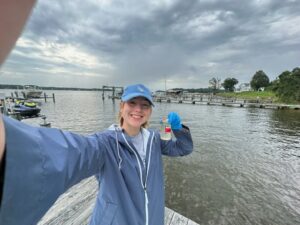
“Como residente de la zona Maryland, suelo practicar paddle surf, nadar y hacer senderismo en la cuenca de la bahía de Chesapeake, especialmente cerca de mi casa, junto a los ríos South, West y Rhode. Consciente de la importancia que tienen estos recursos naturales para mí, me siento motivado a trabajar para promover el acceso público y la concienciación. Los residentes de estas cuencas deben estar informados sobre la salud de sus ríos para que puedan tomar decisiones acertadas antes de realizar actividades recreativas.”
En las entrevistas, rara vez se describe el trabajo de las personas como una simple recopilación de datos. En cambio, lo ven como una forma de cuidar los lugares que les importan y de ayudar a otros a hacer lo mismo. Si bien los datos pueden ser el resultado tangible de sus esfuerzos, estas conversaciones sugieren que la conexión personal es a menudo lo que los inspira.
Impacto y significado
Más allá de la motivación, muchos participantes hablaron del significado que encuentran en el trabajo en sí. Desde contribuir a la concienciación sobre la salud pública hasta apoyar la protección del medio ambiente, sus esfuerzos van más allá de la recopilación de datos. Se consideran parte de una misión más amplia para mantener a las comunidades informadas, conectadas y seguras.
Al leer las respuestas del personal y los voluntarios, surgieron dos definiciones generales de impacto. La primera era el impacto personal y relacional: sentirse conectado, valorado por la comunidad y parte de algo más grande que uno mismo. La segunda era el impacto medible e institucional: generar datos, influir en el comportamiento, mejorar la seguridad e informar las políticas.
Para Jill MacNiece, voluntaria de la red Potomac Riverkeeper, la monitorización es una extensión de la cultura de cuidado mutuo de la comunidad de piragüismo:
“Las comunidades de piragüismo son especiales: tenemos una cultura de solidaridad basada en la comprensión de que los rápidos y las corrientes pueden ser impredecibles y peligrosos, incluso para los piragüistas más experimentados. Nos cuidamos unos a otros y sabemos cómo rescatar a quienes se encuentran en apuros. El monitoreo de las bacterias en la cuenca hidrográfica ha llevado este cuidado por mi comunidad a un nuevo nivel. Me siento honrado de contribuir a la salud del río y de quienes lo recorren en piragua.”
Para Jill, la recompensa reside en proteger a sus compañeros piragüistas y fortalecer los lazos comunitarios. Su sentido de pertenencia se basa en el cuidado de los demás y el compromiso con el bienestar colectivo.
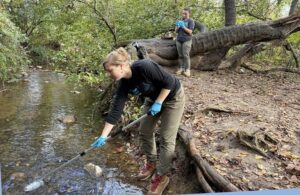
La historia de Sarah Holter, gerente del programa de calidad del agua de Blue Water Baltimore, pone de relieve una dimensión diferente del impacto. Su éxito se centra en la creación de una nueva ruta de monitoreo a lo largo de Herring Run:
“Un éxito reciente del programa Blue Water Baltimore es la nueva ruta de monitoreo a lo largo del arroyo Herring Run, establecida a mediados de 2025. Llevábamos años queriendo recolectar muestras del Herring Run, que desemboca en el río Back, pero la capacidad y la financiación siempre fueron obstáculos. Ahora contamos con 9 estaciones desde las cabeceras del Herring Run, un tramo no mareal, hasta justo por encima del río Back, que sí está sujeto a las mareas. Los residentes de Baltimore que viven en esta amplia zona de la ciudad ahora pueden usar nuestros datos para tomar decisiones informadas antes de interactuar con su curso de agua local.
En este caso, el impacto es tangible y cuantificable. Ampliar la cobertura geográfica significa que más residentes tienen acceso a información fiable sobre sus vías fluviales locales, lo que les permite tomar decisiones informadas sobre actividades recreativas y el uso del agua.
Uno de los temas más destacados en estas entrevistas fue que los participantes parecían valorar tanto el desarrollo comunitario como la mejora de la calidad del agua. El impacto no se definía únicamente por la salud de los cursos de agua, sino también por relaciones más sólidas entre las personas y los lugares que les importan. En este sentido, la ciencia ciudadana tiene éxito cuando produce mejores datos ambientales y una ciudadanía ambiental más comprometida.
Observaciones y tendencias
Aunque estos programas operan en distintas cuencas hidrográficas dentro del área Maryland, se observó un patrón claro: los desafíos, los objetivos y las motivaciones son notablemente similares. A pesar de las diferencias geográficas, los participantes expresaron una comprensión común de la importancia del monitoreo de la calidad del agua y un compromiso compartido con la protección de los cursos de agua locales. Sus respuestas revelaron varios temas recurrentes, como la naturaleza oculta de la contaminación del agua, la influencia de las precipitaciones y la escorrentía pluvial en la calidad del agua y la importancia del monitoreo a largo plazo como herramienta para la gestión ambiental y la acción comunitaria.
Como explicó Colin Casey, voluntario de la Asociación del Río James, “Una de las cosas que he aprendido gracias al monitoreo es la gran complejidad de la cuenca del río James. Se extiende hasta la línea West Virginia, por lo que las lluvias río arriba pueden afectar la calidad del agua en Richmond días después. Incluso sin lluvia local, la escorrentía pluvial río arriba puede provocar niveles más altos de bacterias en los puntos de monitoreo de la ciudad.” Su experiencia pone de relieve cómo los cursos de agua funcionan como sistemas interconectados, donde las condiciones en una zona pueden tener consecuencias río abajo.
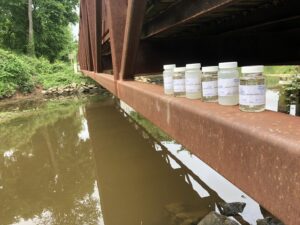
De manera similar, Gabe Horchler, voluntario de Anacostia Riverkeeper, señaló la imprevisibilidad de la calidad del agua, observando que “La calidad del agua puede variar de una sesión de monitoreo a otra, y a veces sin razón aparente, aunque después de una lluvia intensa, la calidad suele ser previsiblemente mala.” Sus comentarios subrayan la importancia de la concienciación pública, especialmente para quienes pescan, nadan o participan en otras actividades recreativas. Las condiciones del agua no pueden evaluarse únicamente por su apariencia, por lo que contar con datos de monitoreo fiables es fundamental para la salud y la seguridad públicas.
La relación entre las precipitaciones y la calidad del agua es especialmente evidente en las cuencas urbanas. Maureen Mitchell, directora de programas de cuencas hidrográficas en Anacostia Riverkeeper, explicó que los cursos de agua dentro de la cuenca de Anacostia siguen lidiando con una elevada contaminación bacteriana, incluyendo E. coli, debido en parte a fugas en las tuberías y a sistemas de alcantarillado combinado obsoletos que se desbordan durante las lluvias. Estos problemas se ven intensificados por el cambio climático, que aumenta la frecuencia y la intensidad de las tormentas fuertes. Como resultado, mayores volúmenes de aguas residuales sin tratar, contaminantes, sedimentos y escorrentía pluvial llegan a los arroyos que a menudo carecen de los humedales y bosques naturales necesarios para filtrar los contaminantes.
En conjunto, estas perspectivas ilustran que los cursos de agua son sistemas dinámicos y complejos cuya salud no puede evaluarse únicamente mediante la observación visual. Asimismo, destacan el papel fundamental que desempeñan las precipitaciones, la escorrentía pluvial y los procesos que afectan a toda la cuenca hidrográfica en la determinación de la calidad del agua.
Otro tema recurrente fue la importancia del monitoreo a largo plazo. Los participantes destacaron consistentemente que los programas de monitoreo son valiosos no solo porque miden las condiciones ambientales, sino también porque proporcionan los datos necesarios para identificar tendencias, localizar áreas problemáticas y orientar acciones concretas. Un monitoreo eficaz respalda los proyectos de restauración, fundamenta la labor de incidencia legislativa, educa al público y motiva la limpieza comunitaria. Además, puede contribuir a visibilizar los desafíos ambientales que enfrentan las comunidades marginadas, las cuales suelen verse afectadas de manera desproporcionada por la contaminación.
En definitiva, el monitoreo resulta más valioso cuando actúa como catalizador para mejorar los resultados ambientales. En lugar de simplemente documentar las condiciones, el monitoreo a largo plazo proporciona el conocimiento necesario para proteger los cursos de agua, fortalecer las comunidades e impulsar un cambio ambiental duradero.
Esta experiencia puso de relieve el poder de la ciencia ciudadana, donde la gente común contribuye a un monitoreo ambiental significativo. Con personal limitado y amplias áreas que cubrir, estos programas demuestran cómo el esfuerzo colectivo puede subsanar deficiencias cruciales y garantizar que se siga recopilando y compartiendo información importante. Proteger nuestros ríos y arroyos no es responsabilidad de una sola persona u organización. Requiere la participación de la comunidad. Ya sea mediante el voluntariado, el aprendizaje o simplemente prestando atención a las condiciones del agua local, todos tenemos un papel que desempeñar para apoyar la salud de nuestro medio ambiente.
Para obtener más información sobre los programas de monitoreo de la calidad del agua de Waterkeeper, visite: https://waterkeeperschesapeake.org/water-quality-monitoring/
Si te interesa saber quién es tu Waterkeeper local y cómo participar, haz clic en este enlace para obtener más información: Miembros de Waterkeeper – Waterkeepers Chesapeake
 ES
ES  EN
EN