
Cada temporada, la Federación de Ríos de Arundel coordina un programa de monitoreo de bacterias para controlar los niveles de enterococos en las zonas ribereñas comunitarias de las cuencas de los ríos Sur, Oeste y Rhode.
En el centro de este trabajo se encuentran las propias comunidades. Su deseo de saber si es seguro nadar, remar o realizar actividades recreativas en sus ríos y arroyos es lo que impulsa este programa de monitoreo. Cada uno de los más de 30 puntos de muestreo en estas cuencas hidrográficas fue seleccionado por miembros de la comunidad y voluntarios y personal realizan muestreos semanalmente desde el fin de semana del Día de los Caídos hasta el fin de semana del Día del Trabajo.
Con el tiempo, el equipo de monitoreo de la Federación de Ríos de Arundel comenzó a notar un patrón durante los muestreos: cada vez más personas se detenían a hacer preguntas. ¿Qué están analizando? ¿Por qué es importante? ¿Qué significan los resultados?
Esas conversaciones revelaron algo importante. Si bien este monitoreo se realiza estacionalmente y su equipo interactúa regularmente con los residentes, todavía había muchos miembros de la comunidad que desconocían tanto el programa como el trabajo más amplio que Arundel Rivers realiza en todas estas cuencas hidrográficas.
Esa constatación suscitó un debate más amplio dentro del equipo de Arundel Rivers: ¿cómo pueden conectar mejor a las comunidades con los cursos de agua que supervisan, incluso cuando no están físicamente presentes para responder preguntas?
La accesibilidad y la transparencia siempre han sido prioridades para la Federación de Ríos de Arundel. Los datos recopilados a través del programa de monitoreo de bacterias ya se comparten públicamente mediante Swim Guide, redes sociales, actualizaciones por correo electrónico y su sitio web. Sin embargo, querían crear otra forma para que las personas interactuaran directamente con la información desde los mismos lugares que se monitorean.
Ese concepto dio origen a la idea de crear letreros de monitoreo comunitario. Instalados en puntos de muestreo específicos en la costa, estos letreros están diseñados para que los datos de monitoreo de bacterias sean más visibles, comprensibles y accesibles para el público. Cualquier persona que pase por allí puede escanear el código QR del letrero para acceder a los resultados más recientes del monitoreo de bacterias a través de Swim Guide en tiempo real.
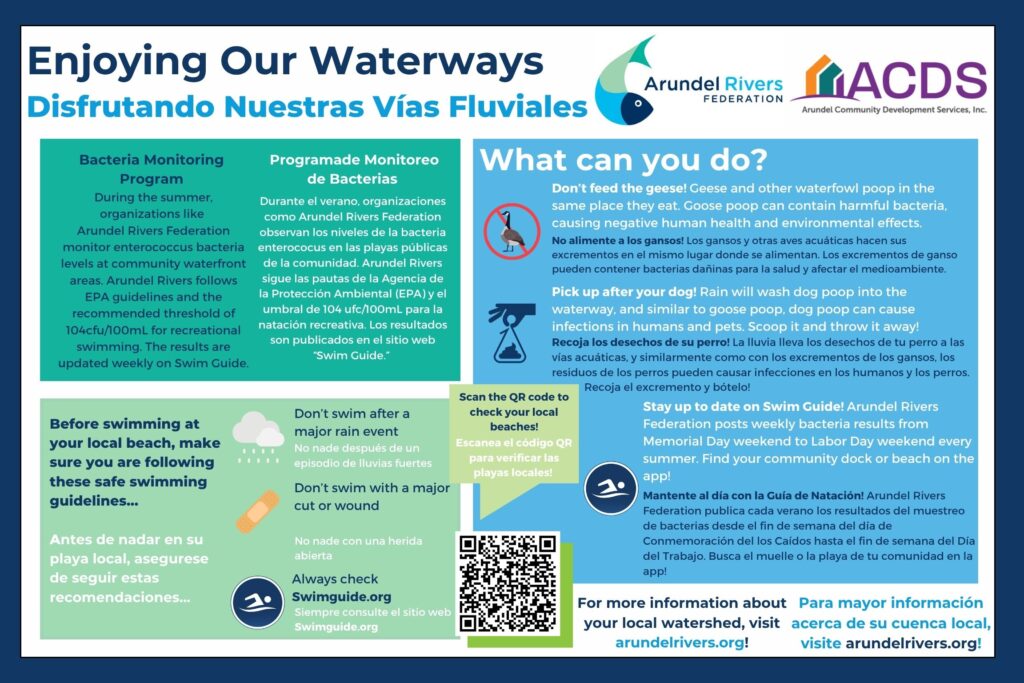
Más allá de los datos en sí, los signos también explican:
- ¿Qué se está muestreando?,
- Por qué es importante el control de bacterias,
- Y qué pueden hacer los miembros de la comunidad para ayudar a proteger los cursos de agua locales.
Al conectar la ciencia directamente con los lugares donde la gente vive, trabaja y se divierte, los datos se convierten en algo más que números en una hoja de cálculo; se convierten en una herramienta para la toma de decisiones informadas y la acción comunitaria significativa.
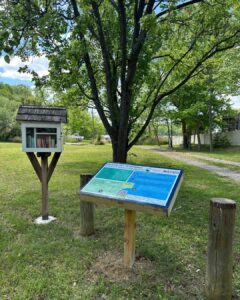
Actualmente, la Federación de Ríos de Arundel instaló su primer sistema comunitario específico para el monitoreo de bacterias. Se prevé la instalación de un letrero en 2025 en un centro comunitario ribereño interesado. Sin embargo, la señalización educativa ha formado parte desde hace tiempo de las iniciativas de restauración y divulgación de la Federación del Río Arundel en toda su cuenca hidrográfica. La ampliación de futuros proyectos de señalización dependerá de la financiación disponible y del interés continuo de la comunidad.
Gracias a una subvención adicional, pudieron diseñar e instalar su primer letrero y esperan llevar señalización similar a más puntos de monitoreo de bacterias en las cuencas hidrográficas del sur, oeste y del río Rhode en el futuro.
El seguimiento de la salud de los ríos South, West y Rhode sigue siendo fundamental para la labor de la Federación del Río Arundel, que se guía por su misión. Para proteger y restaurar estos cursos de agua, primero deben comprender su estado y, lo que es igualmente importante, garantizar que la información sea accesible para las comunidades que viven a su alrededor a diario.
 ES
ES  EN
EN