
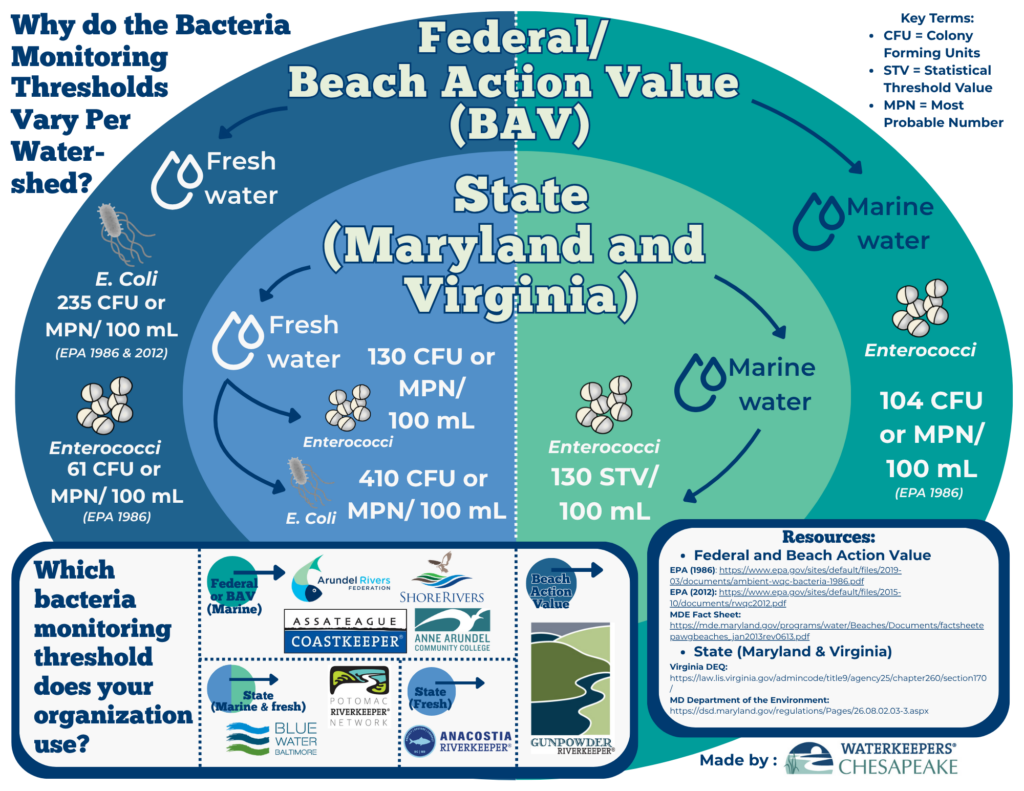
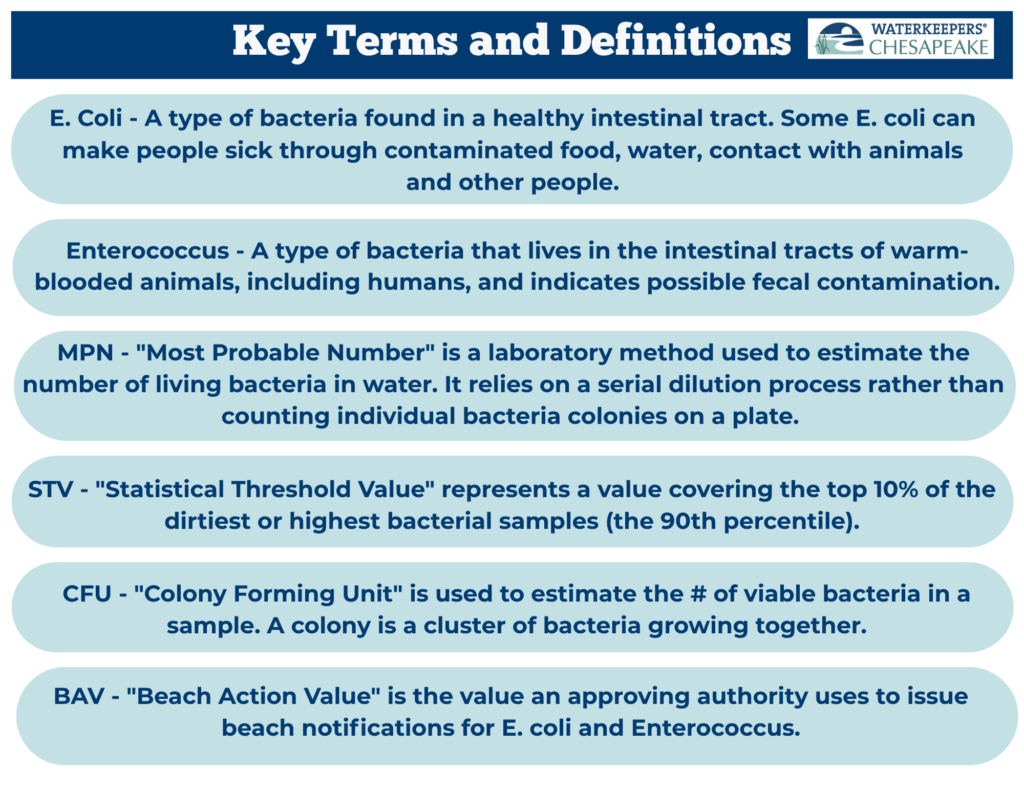
Each Waterkeeper organization chooses the best way to monitor bacteria levels in their waterways based on the specific characteristics of their watershed. One of the main differences is if a program monitors for Enterococci versus E.coli. The type of bacteria monitored by a Waterkeeper group is determined by the saline levels in their rivers: marine, brackish, or fresh. Both E.coli and enterococci are indicators of fecal coliform that can cause illnesses when people or pets recreating in the water are exposed to them. However, enterococcus is specifically monitored in both fresh and marine (salt) water while E.coli is monitored in fresh water systems. For example, Arundel Rivers Federation monitors enterococcus on the South, West, and Rhode rivers which are brackish waterways. In comparison, the Anacostia Riverkeeper monitors E.coli in the Anacostia River, a freshwater system.
The jurisdiction that the monitored waterways are located also determines the bacteria monitoring threshold used by the Waterkeeper organization. Waterkeeper organizations can choose to monitor their bacteria levels based on Federal, State, or Beach Action Value (BAV) standards.
 EN
EN  ES
ES