
By Katlyn Schmitt, Staff Attorney
Earlier this spring, Chesapeake Bay states released their final phase of draft plans to restore waterways and the Chesapeake Bay by 2025. These draft plans, also known as the Phase III Watershed Implementation Plans (WIP), are geared to help states meet their clean water commitments in this multi-state effort to restore the Bay under the Chesapeake Bay Total Daily Maximum Load (TMDL). The TMDL is targeted to address the nitrogen, phosphorus and sediment pollution overloading the Bay and is the largest cleanup plan ever designed collaboratively by several states and the federal government.
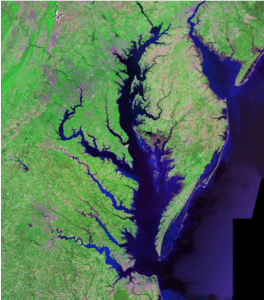 The TMDL was a response to the Bay’s steady decline in health almost a decade ago — with widespread dead zones and a steep decline in fish and shellfish populations. Since then we’ve seen signs that the Bay is recovering with an increase in blue crab populations, along with more aquatic grasses. It’s important that the Chesapeake Bay states carry forward this work through 2025 and beyond in order to keep up this clean water trend.
Waterkeepers Chesapeake drafted comments on Maryland, Virginia and Pennsylvania’s draft plans — urging these states to lay out specific strategies, investment plans, and a clear framework for how each state plans to achieve its water quality targets by 2025. These three states account for ninety percent of the pollution entering the Chesapeake Bay. While each state has made progress under the first two phases of the TMDL, every state must provide reasonable assurances that they are prepared and capable of taking us through the finish line in line or ahead of our 2025 clean water goals. This work will translate to cleaner waterways across the Chesapeake Bay that are safer to swim in and healthier for aquatic life.
Below you can find some of our top takeaways in reviewing the draft plans from each state —
Pennsylvania
While Pennsylvania should be commended for upping the ante for public engagement strategies, the state as a whole is lagging significantly behind in meeting its nitrogen reduction targets and its draft plan is incomplete. The state needs to complete the plan with an outline of the necessary actions it must take to get to its 2025 goals and ramp up the pollution reductions from the agricultural and stormwater sectors.
- No dedicated source of funding – The draft WIP falls short of $257 million in needed funding for the clean water programs and practices that will need to take place for the state to meet its 2025 targets.
- Draft plan is incomplete as written – Not only does the draft plan not outline about thirty percent of the actions necessary to meet its 2025 goals; it completely leaves out over 11 million pounds of nitrogen reductions needed (target = 34.1 million pounds, but plan only accounts for 22.7 million pounds).
- Need for increased accountability – Pennsylvania must provide more assurances that thirty-four counties in the state will follow through on drafting and implementing their County Action Plans. The pilot program for these county-specific watershed plans failed in four counties; resulting in more nitrogen pollution going into local waterways.
- A failure to adequately account for growth – Pennsylvania failed to properly account for growth generally (i.e. climate change and population growth) and in the agricultural sector by underestimating the current poultry boom. The state should conduct its own state census of agriculture to get a better sense of industry trends. Concentrated Animal Feeding Operations (CAFOs) which take part in the lion’s share of pollution from the agricultural sector also should have been included in the draft plan.
- Did not follow through on stormwater pollution – The state did not include any new requirements for those under a stormwater permit, despite recommending five new actions for permit holders to take to help meet the state meet its goals for this sector. It’s unclear whether permit holders will take these actions, without being required by the state to do so. Likewise, the state did not listen to the recommendations of the Stormwater Workgroup, which was designed to work on the Chesapeake Bay TMDL.
Maryland
We are encouraged by claims that Maryland will meet and exceed some of its 2025 clean water targets, especially for nutrient pollution. Likewise, Maryland should be applauded for its work so far in significantly reducing sewage pollution from wastewater treatment plants. Despite this, the draft plan has some miscalculations and does not include reasonable assurances – like specific plans and commitments – that the state will meet its 2025 goals for stormwater and septic pollution.
- Plan lacks specific commitments and necessary strategies – Significant reductions have already been made in the wastewater sector, but the draft plan moving forward lacks specific details and commitments; this calls into question whether the state can actually meet its targets for this sector. Likewise, the draft plan for stormwater and septic pollution in Maryland also lack clear details. The state set out aggressive targets for agricultural pollution, but without further details it seems unrealistic to achieve these targets given the slow pace of reductions made so far.
- Miscalculations do not bode well for water quality – The draft plan uses several calculations that do not match or sum correctly. Pollution reduction numbers in different sectors vary throughout the plan. The plan also double counts some load reductions. For example, the plan counts the phosphorus and nitrogen pollution reductions for its sediment load reductions. The fact that phosphorus can attach itself to sediment does not mean that the two pollutants are universally correlated.
- The plan uses illogical strategies that will harm local water quality – The plan uses “basin-to-basin exchanges” where pollution reductions made in one watershed can be transferred to another watershed. For example, Maryland allocated 1.5 million pounds of nitrogen reductions made on the Western Shore to the Eastern Shore. This only happens on paper, but not in practice – meaning that Maryland will focus on cleaning up waterways to the Western Shore, ignoring the need to clean up local waterways on the Eastern Shore where the cleanup is direly needed. Basins that contribute the most pollution to the Bay should reduce the most pollution.
- Nutrient trading cannot be a source of overall pollutant load reductions – The nutrient trading program may increase pollution loads, but by its very nature it is irrational to expect that the program will reduce overall loads – as the plan stipulates. By definition the nutrient trading program is a net-zero operation for pollution (or above zero in some instances). Reductions in one sector are used to offset the lack of progress in another sector, which will continue to pollute. This must be reflected in the plan.
- The plan does not adequately account for growth – Maryland is expected to grow to an additional 478,000 households by 2035, with an estimated additional load of more than 2 million pounds of nitrogen pollution to the Chesapeake Bay each year. The plan lacks in clear details about how it will implement actions to account for this growth in the stormwater and wastewater sectors. Relying on “adaptive management” ignores the purpose intent of requiring each state to come up with these plans.
Virginia
Virginia, like Maryland, is fairly on track to achieve its 2025 goals as long as the state follows through with more details on implementation, technical assistance and funding. The state must continue its work on wastewater pollution and increase its efforts to reduce agricultural and stormwater pollution. With an adequately funded plan in place, Virginia will be able to move forward with the assurance that the outlined programs, policies, regulations, and incentives will ensure the state meet its 2025 goals for the Chesapeake Bay, and more importantly, improve the health of local Virginia waterways.
- Plan lacks needed financial assurances – Even though a majority portion of pollution reductions in Virginia must come from the stormwater and agricultural sectors for the state to meet its clean water goals, less than thirty-nine percent of state water quality improvement funding has been directed to both sectors. The state must adequately fund both the agricultural and stormwater sectors – investments have and will result in clear pollution reductions and cleaner local waterways. Lastly, the plan lacks specific budget proposals for each state agency that will be enforcing, monitoring, and providing technical assistance under the WIP.
- More funding needed for agricultural pollution – The important agricultural and stormwater programs outlined in the draft plan must be accompanied by adequate and consistent funding. The plan should include more funding details about agriculture best management practices, assistance programs, and encouragement of nutrient management.
- The plan should continue progress made on wastewater pollution – Although wastewater treatment improvements have achieved tremendous progress over the past decade, new required reductions are both appropriate and in the best interest for the state in the James and York River watersheds. The past success of wastewater upgrades should be continued through 2025 and beyond.
We encourage Pennsylvania, Maryland and Virginia to include more concrete plans and strategies for funding and program implementation. Each state must also account for growth and climate change based on the fact that we live in a changing world — with increasing needs to achieve cleaner waterways. Without more detailed information, the states are missing an important opportunity to set a successful course for the final phase of the Chesapeake Bay TMDL and clean water through 2025 and beyond.
 EN
EN  ES
ES