
Our Waterkeepers are working to reduce agricultural pollution in the waterways of the Chesapeake Bay and coastal watersheds. As the largest source of pollution, reducing agricultural pollution is essential to meeting the pollution reduction goals of the Chesapeake Bay Cleanup Plan (TMDL).
Our priorities:
- Pushing for greater transparency and accountability for the agricultural industry.
- Insisting that states improve regulation of industrial factory farms known as CAFOs.
- Keeping excess poultry manure from polluting our waterways.
Our campaigns:
 Our Fair Farms campaign is building a fair and just food system through a movement of Marylanders of all stripes, working together for a new food system — one that’s fair to farmers, invests in homegrown, healthy food, and restores our waterways instead of polluting them.
The Million Acre Challenge helps Maryland farmers build soil health, increase farm profitability, and improve water quality — while making farms resilient and active in the face of climate change. This farmer-focused collaborative uses soil health science, economics, education, and incentives to achieve no fewer than one million acres of healthy soil in Maryland by 2030.
 The Enforcement, Engagement, and Empowerment for Change on the Eastern Shore (E3) Initiative seeks to defend and implement pollution-reducing policies; pressure government and industry to meet community-led demands for accountability and solutions; accurately track agricultural pollution impacts on water and people; and create a level playing field for small and sustainable farmers. E3’s work focuses on enforcement of environmental laws, advocacy for policy reform, community organizing, and operation of new citizen air and water monitoring networks. E3 aims to ensure that any expansion of the poultry industry on Maryland’s Eastern Shore does not harm the health of local residents or pollute waterways.

Protecting Farmlands & Water from PFAS in Sewage Sludge
In Maryland, building on previous bills targeting industrial sources of PFAS and banning PFAS in some products, Senator Sara Love and Delegate Dana Stein introduced a bill (HB925/SB719) to limit PFAS in sewage sludge (known as biosolids) applied to farmland. The Problem Sewage sludge (also known as biosolids) is the solid waste produced during the … Read more
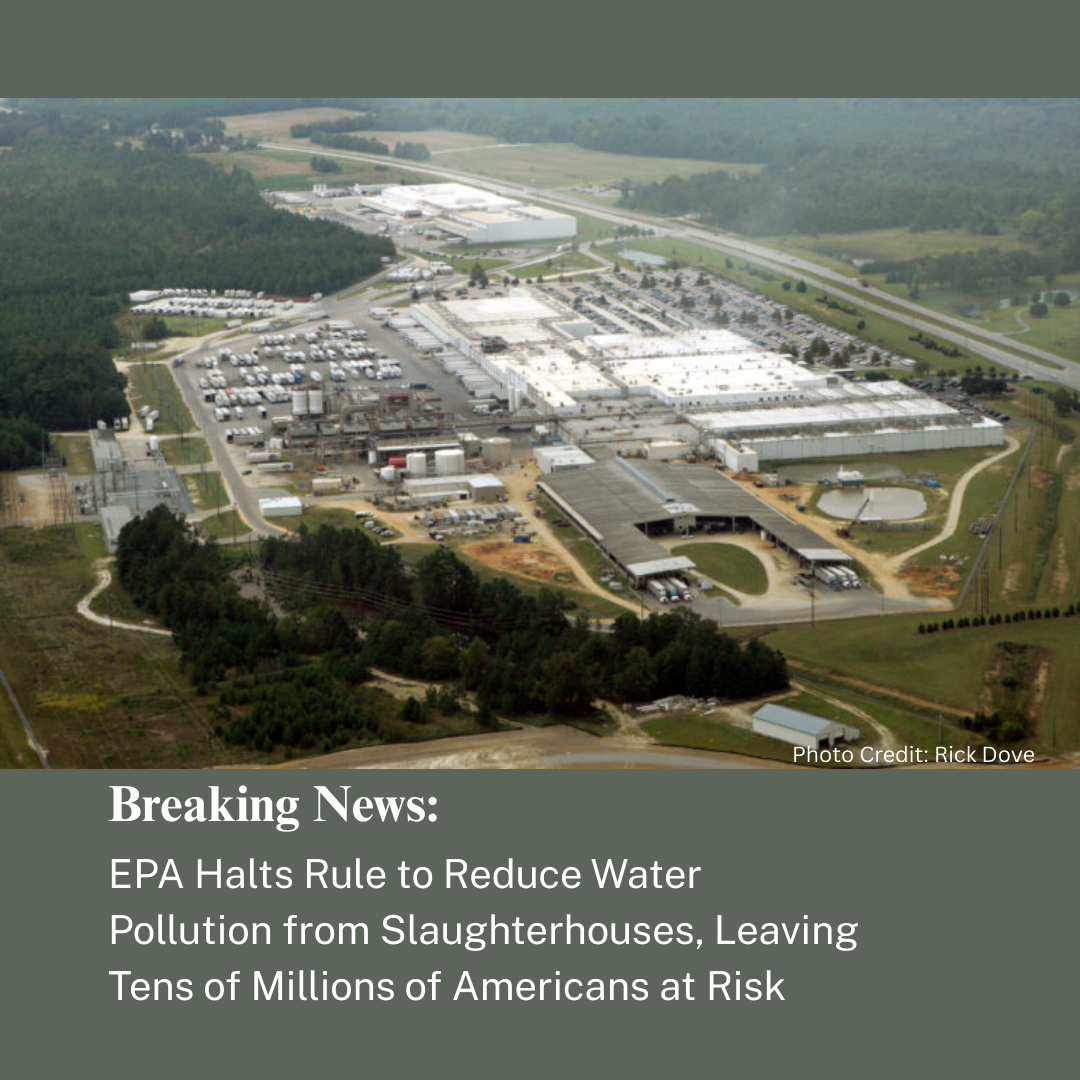
Waterkeepers Condemn EPA’s Decision to Halt Rulemaking to Reduce Water Pollution From Slaughterhouses
This Action Will Leave Tens of Millions of Americans at Risk from Unsafe Drinking Water and Other Contamination Over the Labor Day weekend, U.S. Environmental Protection Agency (EPA) Administrator Lee Zeldin announced the agency will abandon its effort to modernize outdated and grossly inadequate water pollution control standards for slaughterhouses and rendering facilities. EPA misleadingly portrays … Read more
PFAS & Sewage Sludge Bill 2025
In Maryland, Senator Sara Love and Delegate Dana Stein introduced a bill to limit PFAS in biosolids that are applied to farm land (SB0732/HB0909). The Problem Biosolids are the solid waste, or sludge, produced during the treatment of municipal, human, and industrial wastewater. In Maryland, biosolids — including some from out-of-state facilities — are used … Read more

Webinar: PFAS, Sewage Sludge & Farmlands
Is sewage sludge laced with ‘forever chemicals’ contaminating Virginia’s farmlands? Join us on an informational webinar on PFAS found in sewage sludge being applied to Virginia farmlands. Our speakers will discuss the emerging issue described here in this Virginia Mercury article and open up for a Q&A session for attendees. When: Tuesday, November 19 @ … Read more

Community, Environmental, and Animal Welfare Organizations Press EPA to Strengthen Water Pollution Control Standards for Slaughterhouses and Animal Rendering Facilities
Stronger standards would prevent hundreds of millions of pounds of pollution from reaching rivers and streams, helping to protect more than 22 million people. WASHINGTON, D.C. — Forty-five community, environmental, and animal welfare organizations — together representing tens of millions of people across the United States — filed public comments yesterday with the U.S. Environmental … Read more
 EN
EN  ES
ES