
Every drop tells a story – of health, change, and the communities that depend on it. Across the Chesapeake Bay watershed, dedicated Waterkeepers are listening closely. From rivers and streams to tributaries, they collect vital data that help shape how we protect and restore our waters.
Through the Chesapeake Monitoring Cooperative (CMC), Waterkeepers’ data is verified and recognized through three levels of monitoring. At the top sits Tier III – the gold standard of community science. Tier III data isn’t just credible: it’s powerful. It informs legislation, guides restoration funding, and strengthens the bridge between science and stewardship.
In this blog, we’re diving into what Tier III water quality monitoring looks like in action and meeting four organizations leading the charge to safeguard their waterways and, ultimately, the Bay itself: Blue Water Baltimore, Arundel Rivers Federation, Anacostia Riverkeeper, and Potomac Riverkeeper Network.
What is Tier III Water Quality Monitoring?
The Chesapeake Monitoring Cooperative helps Waterkeepers and community scientists turn passion into powerful data. Through training, resources, and toolkits, CMC guides organizations as they work toward certification in different levels of water quality monitoring.
At its core, the CMC’s mission is to make water quality data accessible, reliable, and actionable. Its vision is to ensure that every community across the Chesapeake Bay watershed has the tools to understand local water health and to use that knowledge to drive real change.
So what makes Tier III important? It represents the highest level of data credibility, meaning the information collected can be used by state agencies and other government entities for regulatory and scientific assessments. To reach this level, a Waterkeeper’s monitoring program must meet strict quality standards set by the U.S. Environmental Protection Agency (EPA) and the Chesapeake Bay Program. Their Quality Assurance Project Plan (QAPP) must be approved, and their field and lab practices must pass a detailed audit to ensure consistency and accuracy at every step.
Once approved, Tier III data becomes part of the Official Science that shapes how our waters are managed. In short, Tier III certification ensures that community-collected data doesn’t just raise awareness but it drives real policy, restoration, and environmental protection of our local waterways across the Chesapeake Bay.
Profiles of Tier III Water Quality Monitoring Programs
These four Waterkeeper organizations are proving how local passion, backed by scientific precision, can change the game for clean water.
Blue Water Baltimore
A leader in community science, Blue Water Baltimore stands out as one of the few Waterkeeper organizations to achieve Tier III status for bacteria monitoring, the highest level of credibility recognized by the EPA and the CMC. First certified in 2018 for their tidal program, the milestone underscored their early dedication to scientific integrity.
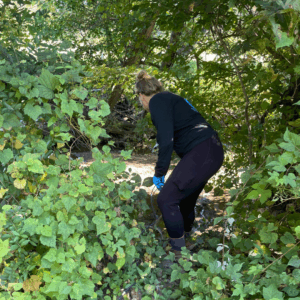
As of 2025, their monitoring network spans 60 sites across key urban watersheds like Herring Run, Gwynns Falls, Baltimore Harbor and Jones Falls. Tidal samples are collected weekly or biweekly, weather permitting, from April through mid-November, while non-tidal samples are gathered monthly year-round. Blue Water Baltimore shares their data weekly by updating their website’s map, posting to social media and sharing an annual report card.
Using EPA-approved protocols, Blue Water Baltimore produces data that’s both scientifically sound and immediately actionable supporting public health alerts, identifying pollution sources, and strengthening legal regulatory efforts. Their program demonstrates how community led science, when executed with rigor, can influence policy and protect public health.
Arundel Rivers Federation
Since achieving Tier III status for water quality monitoring in 2019, Arundel Rivers Federation has continued to grow its commitment to protecting local waterways. In 2025, the organization reached another milestone of Tier III status for bacteria monitoring, a recognition focused on the health of tidal waters.
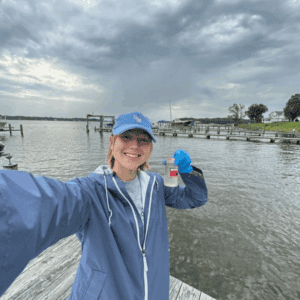
From Memorial Day through Labor Day, the team monitors 31 sites each week, collecting water samples every Thursday for 15 weeks. These samples are tested for E. coli and Enterococcus key bacteria that indicate the safety of recreational waters. In 2025, twelve trained volunteers joined staff in the field, with all samples analyzed at Anne Arundel Community College following strict QAPP protocols.
The program’s impact extends far beyond data collection. Results directly support restoration planning, public awareness campaigns, and environmental education. Each year, Arundel Rivers Federation publishes an interactive Water Quality Report Card and ArcGIS StoryMap, giving residents an accessible way to explore the health of their local rivers.
Potomac Riverkeeper Network
Since its founding in 2000, the Potomac Riverkeeper Network (PRKN) has been a driving force in protecting the Potomac River and its vast watershed. Their bacteria monitoring spans both the Upper and Lower Potomac, as well as key tributaries like Rock Creek Park, Aquia Creek, Antietam Creek, Little Hunting Creek, and the Occoquan River.
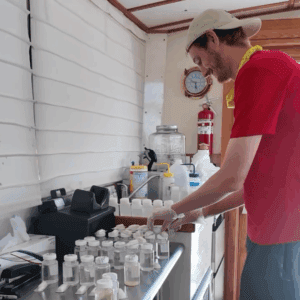
From May through September, PRKN’s staff and volunteers monitor 29 sites, collecting samples from both tidal and non-tidal areas. After maintaining Tier III certification in Virginia for several years, the organization expanded its excellence in June 2025 by earning Tier III status in Maryland for bacteria monitoring, a milestone that affirms the quality and reliability of their data.
That data has tangible impact: it informs public health warnings, helps track pollution sources, supports regulatory and legal actions, and drives education and outreach. PRKN keeps the public informed through annual reports, weekly social media “report cards,” and real-time updates via the Swim Guide app, making water quality awareness part of everyday life. The data they analyze helps them to advocate for lifting DC’s ban on swimming in the river; check it out here.
Anacostia Riverkeeper
Founded in 2008, Anacostia Riverkeeper plays a critical role in monitoring water quality throughout the Anacostia River and its tributaries including Northwest Branch, Sligo Creek, Lower Beaverdam Creek, and Northeast Branch.
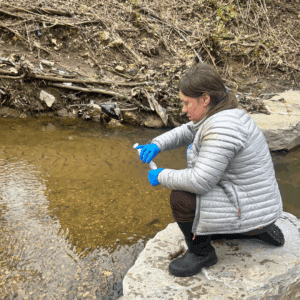
Their monitoring efforts are unique in that they span both Maryland and Washington, D.C. From May through September, volunteers collect samples biweekly at 15 Maryland sites and weekly at 9 D.C. sites. In June 2025, the organization achieved Tier III certification for its non-tidal bacteria monitoring in Maryland, reflecting years of steady dedication and volunteer training.
With approximately 45 trained volunteers, Anacostia Riverkeeper uses its high-quality data to fuel public education campaigns that connect residents to the health of their local waterways. They share their data through social media, regularly update their interactive website map, and produce annual reports to keep the community informed and engaged. Their work shows how data-driven community science can inspire awareness, pride, and environmental action across two jurisdictions.
Why Tier III Community Science is a Game Changer
Tier III monitoring isn’t just about collecting samples: it’s about empowering communities with credible sources. When data meets the highest standards of accuracy and transparency, it gains the legitimacy needed to shape policy, guide restoration priorities, and influence decision-making across the Chesapeake Bay Watershed.
But beyond the science, Tier III builds something equally vital: trust and stewardship. It bridges the gap between data and advocacy, creating a space where residents, students and volunteers can learn, contribute, and take pride in protecting their waters.
When Waterkeepers across the Waterkeepers Chesapeake coalition share their findings, they spark conversations, inspire curiosity, and invite their communities to join the work of safeguarding their local rivers, streams and bays.
From the headwaters of small creeks to the open waters of the Bay, Tier-III certified Waterkeepers show what’s possible when passion, precision, and purpose come together.
Their data drives accountability.
Their stories inspire connection.
And their work reminds us that protecting clean water isn’t just a profession, it’s a shared responsibility that begins right where we live.
 EN
EN  ES
ES